Image

Everest Base Camp Trek – 14 Days

2248 Reviews in TripAdvisor
Recommended by 99% of travelers

US $1290PP

13 Days from US $1750
SAVE $460 per person

Group–Size Discounts

Group discounts are exclusive to your group size only. We do not merge groups.

No. of Persons Price per Person
2 – 3 Pax US $1280
4 – 7 Pax US $1230
8 – 13 Pax US $1180
14 – 21 Pax US $1140
Dates, Discount are applied in next step.

Everest Base Camp Trek – 14 Days FAQs

General Information

Expand All
Why trek the Everest Base Camp with Discovery World Trekking? ▾
We offer experienced local guides, small group sizes, flexible itineraries, and a strong safety record built over years of operating in the Khumbu region.
How long is the Everest Base Camp Trek? ▾
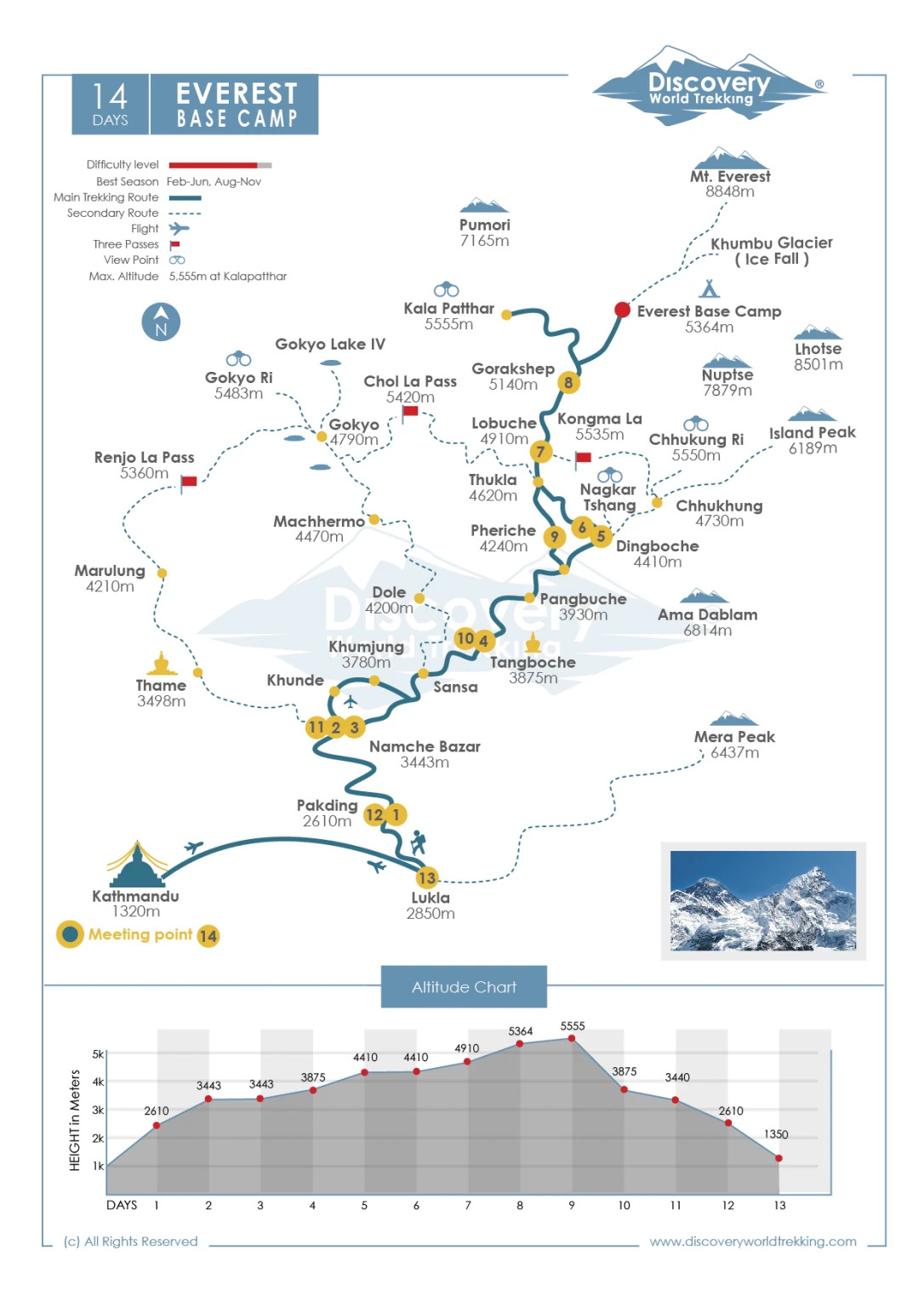
The classic itinerary takes 12 to 14 days round trip from Lukla, including acclimatization days at Namche Bazaar and Dingboche.
Where is Everest Base Camp? ▾
Everest Base Camp sits at roughly 5,364 meters in the Khumbu region of northeastern Nepal, at the foot of the Khumbu Icefall.
What are the age restrictions for the Everest Base Camp Trek? ▾
Trekkers are generally required to be at least 10 years old, with no strict upper age limit provided you're in good health and reasonably fit.
How crowded is the Everest Base Camp Trek? ▾
Peak seasons (spring and autumn) see steady foot traffic on the main trail, though it rarely feels overcrowded outside of a few busy teahouse stops.
What are the major attractions of the Everest Base Camp Trek? ▾
Highlights include Namche Bazaar, Tengboche Monastery, Kala Patthar's sunrise viewpoint, and the base camp itself beneath the Khumbu Icefall.
Is it possible to complete the Everest Base Camp Trek within a short duration? ▾
Shorter itineraries using helicopter transfers for part of the route can compress the trip to around 7-9 days, though this reduces acclimatization time.
Can I see Mount Everest from the Everest Base Camp? ▾
From base camp itself the summit is largely hidden by surrounding peaks; the classic view of Everest comes from Kala Patthar, a short climb above Gorak Shep.
Trek Difficulty

Expand All
How difficult is the Everest Base Camp trek? ▾
It's rated moderate to challenging, mainly due to altitude rather than technical terrain, with long walking days at high elevation.
Is the Everest Base Camp Trek harder than the Manaslu Circuit Trek? ▾
Manaslu Circuit is generally considered more physically demanding due to the high Larke Pass crossing, while EBC is longer at altitude overall.
Do I need any technical climbing skills? ▾
No technical climbing skills are required; the route is a trekking trail suitable for anyone with reasonable fitness and hiking experience.
How many hours do I walk each day? ▾
Most days involve 5 to 7 hours of walking, with shorter acclimatization days built in around Namche and Dingboche.
Is EBC Trek challenging for beginners? ▾
Beginners can complete the trek successfully with proper preparation, a gradual pace, and adequate acclimatization time.
Can I trek to EBC alone? ▾
Independent trekking is possible, though hiring a licensed guide is recommended for safety, navigation, and support in case of altitude issues.

Preparation & Fitness

Expand All
Do I need training for the EBC trek? ▾
Training is highly recommended to build the cardiovascular and leg endurance needed for consecutive days of high-altitude walking.
How should I train for the EBC trek? ▾
A mix of cardio, hill walking with a loaded pack, and strength training for 2-3 months beforehand works well for most trekkers.
How to prepare to trek to Everest Base Camp? ▾
Beyond fitness, prepare by breaking in your boots, packing appropriate layers, and learning the basics of altitude sickness prevention.
How to acclimate to high altitude quickly? ▾
Ascend gradually, follow the "climb high, sleep low" principle, stay hydrated, and build rest days into the itinerary at key elevations.
Can I do an EBC trek without training? ▾
It's possible for very fit individuals, but lack of preparation increases the risk of fatigue and altitude-related discomfort on the trail.

Permits

Expand All
What permits do I need for the EBC trek? ▾
You'll need the Sagarmatha National Park entry permit and the Khumbu Pasang Lhamu Rural Municipality permit.
Where can I obtain these permits? ▾
Permits can be arranged in Kathmandu or on arrival in Lukla and Monjo, and are usually handled by your trekking agency.
How much do the permits cost? ▾
Combined permit costs typically run around $50 per person, though prices can change with local regulations

Insurance & Visa

Expand All
Do I need travel insurance for the EBC trek? ▾
Yes, insurance covering high-altitude trekking and emergency helicopter evacuation up to 6,000 meters is essential.
How do I get a Nepal visa? ▾
Most nationalities can obtain a visa on arrival at Kathmandu airport, or apply in advance through a Nepali embassy.

Guides & Porters

Expand All
Is a guide mandatory for the EBC trek? ▾
A licensed guide is now required by regulation for trekking in this region and is strongly recommended for safety.
Should I hire a porter as well? ▾
A porter carries your main baggage so you only need a day pack, which significantly eases the physical demand of the trek.

Accommodation

Expand All
What type of accommodation is available on the trail? ▾
Teahouses provide simple twin rooms along the entire route, with more comfortable lodges available in Namche and Lukla.
Are private rooms available? ▾
Most teahouses offer private twin rooms, though at higher altitudes rooms are more basic and shared bathrooms are common.

Food & Drinks

Expand All
What food is available during the trek? ▾
Teahouses serve dal bhat, noodles, soups, and basic Western dishes, with menus becoming simpler at higher elevations.
Is the drinking water safe? ▾
Boiled or filtered water is available for purchase at teahouses, and a personal filter or purification tablets are recommended as backup.

Weather

Expand All
What is the best season for the EBC trek? ▾
Spring (March-May) and autumn (September-November) offer the most stable weather and clearest mountain views.
How cold does it get at Base Camp? ▾
Nighttime temperatures near base camp can drop well below freezing, even during the warmer trekking seasons.

Health & Safety

Expand All
What are the symptoms of altitude sickness? ▾
Common symptoms include headache, nausea, dizziness, and fatigue; these should never be ignored during the trek.
What safety measures are in place on the trek? ▾
Guides monitor for altitude sickness daily, itineraries include acclimatization days, and emergency evacuation plans are always in place.

Quick Questions? Ask Our Experts

Our experienced team is available to help you plan the perfect Himalayan adventure from gear to permits to logistics.

Chat with Us on WhatsApp

Get instant answers to your trekking queries. Our team responds within minutes even on weekends and holidays.

Chat on WhatsApp
Book Now